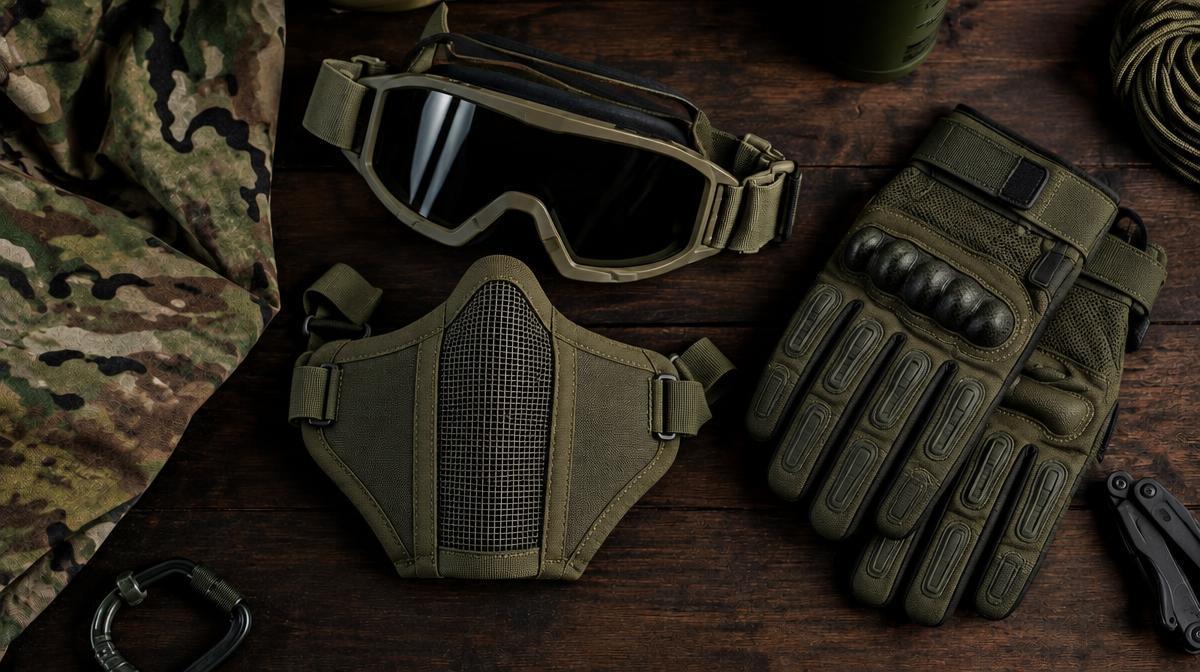
Please remember that your eye protection is a non-negotiable item. This is the basic field equipment you should not buy cheaply.
When properly played, the sport of Airsoft is safe. Lightweight plastic projectiles travel at relatively low speeds. When it is played properly refers to the vast majority of safe Airsoft games. The single most important piece of protective gear for any player is the eye protection rated to stop a BB traveling at close range.
The eye protection baseline
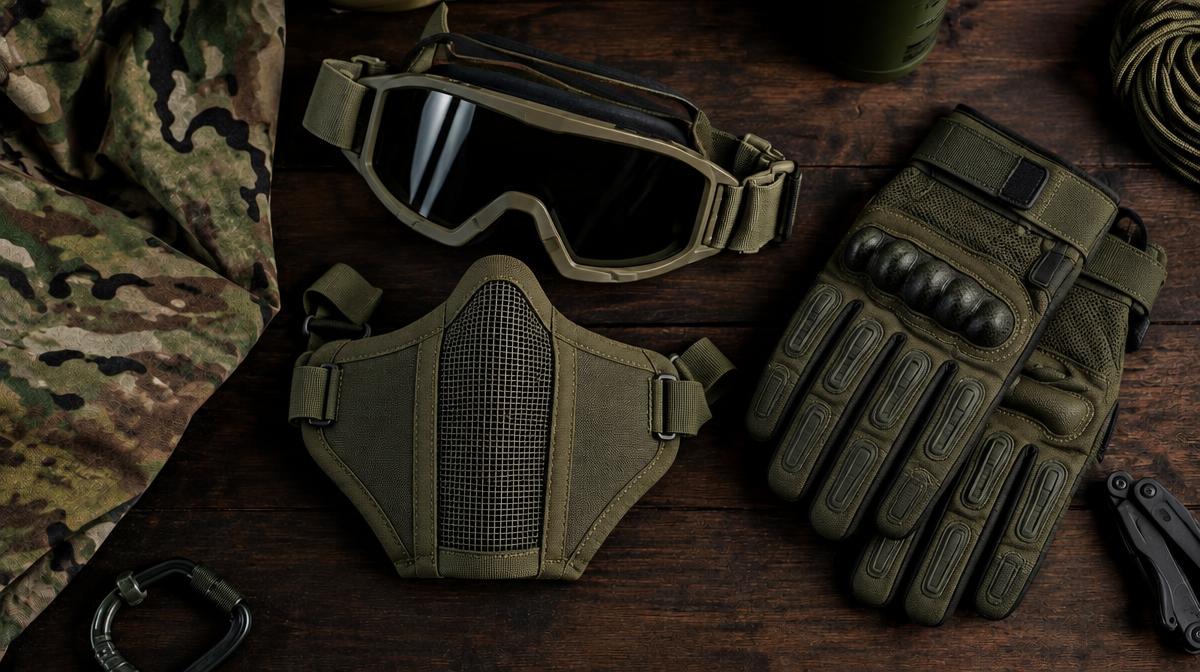
Full-seal goggles which are rated to protect against impact (EN 166 or ANSI Z87.1) are marked on the lens or frame and are made from rated polycarbonate. This type of eye protection is preferred by most paintball sites and is recommended by most medical practitioners as BB fragments can pass through mesh.
Make sure the goggles sit far enough away from your face so a BB won’t enter from the side, and make sure the strap won’t loosen when you put a helmet on.
What else belongs in the bag
- Full-face protection for younger players or anyone playing indoor CQB
- Hard-knuckle gloves. While your arms are probably hard enough already, your fingers take a lot of hits on a rifle.
- A helmet or bump cap for the site that has low branches or hard cover.
- Knee pads for the harsh effects of kneeling on roots & gravel over the course of the day.
- A barrel sock or bag for the walk back to the safe zone
- A basic first aid kit, including eye wash
Rules that are not optional
The players’ eye protection must be in place prior to entering the safe zone, i.e. not when the whistle is blown for the end of a game or when withdrawing from the play area. Furthermore, the players remove their rifle bags and magazines within the same area as the above.
DO NOT alter replicas to circumvent safety features, DO NOT remove the end of the barrel before transporting the replica, and DO NOT test fire at anything you do not intend to hit. It is only the airsoft players themselves who police the sport to ensure its continued existence as a legal pastime.
Start with field rules
Before buying an airsoft gun or altering the spring, check with local airsoft fields for Chronograph limits, Minimum engagement distance, Full-seal eye protection required, and Transport of replicas rules in effect. Note that a gun’s manufacturer- published velocity is only a starting point as many factors can change the actual measured energy such as the weight of the BB, hop settings, temperature, and maintenance of the gun.
Treat protective equipment as part of the system
A good mask and good rated lenses help you see far enough to make good decisions on the field. Comfortably test fit a player with same hat, headset and cheek welds to be used on the field. Damaged lenses need to be replaced. Always follow the manufacturer’s cleaning instructions for your eye protection.
How to evaluate the advice
Separate your facts from your preferences. You can verify weight, length, and magazine capacity, as well as a chronograph test. Trigger feel, overall balance, and stock use are subjective to the user, and you should be able to find out test conditions as well as where the advice giver may differ from you in their assessments.
A sensible next step
So first list out your fields limits (such as a maximum energy or minimum engagement distance), then list out your role on the field, and finally the problem you are trying to solve with your Airsoft gear. Now go test one inexpensive modification to see if it has the desired effect.
Legal and practical responsibility
Always remember to handle your Airsoft replicas in a safe manner. Replicas must be purchased in line with local laws, look like the real thing and be used responsibly in public. Always check the current laws with the relevant authorities or the venue where you intend to use your Airsoft replicas. Transport your replicas in a suitable case and never brandish a replica in public.
Read specifications in context
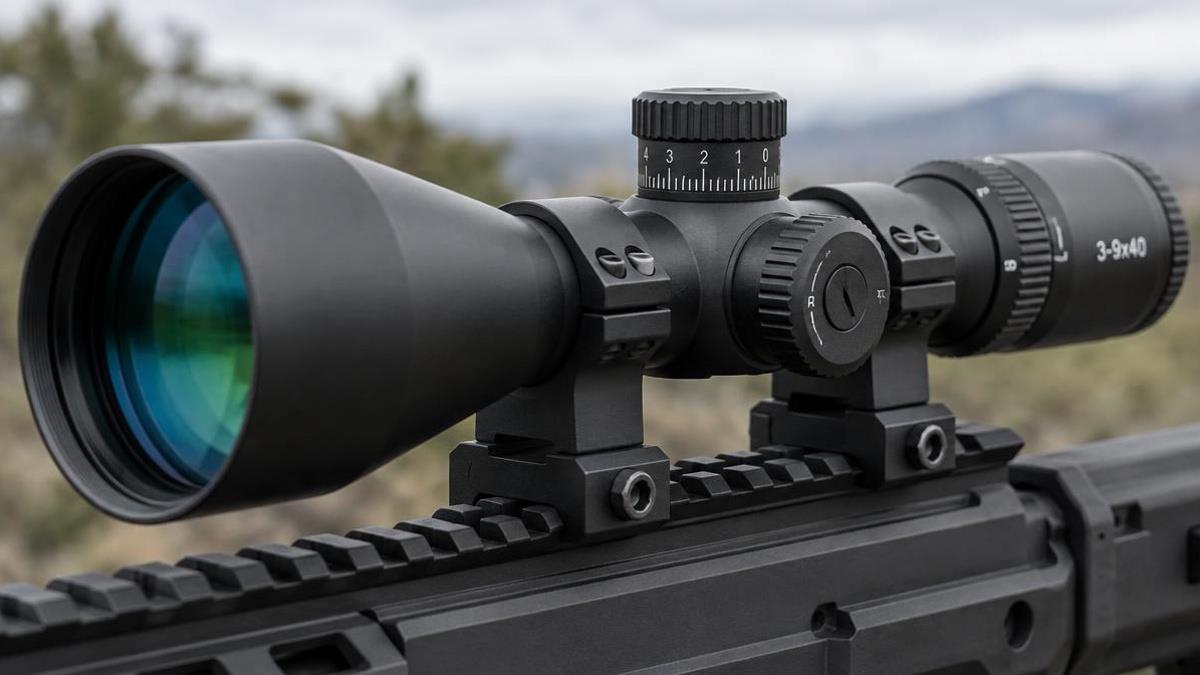
For the range velocity, accuracy and range are normally tested under a variety of conditions including different weights of BB, various hop up settings, different temperatures, different conditions of the barrel, and with different methods of measuring. Therefore, it is wise to look for field test reports as well as owners reports that detail the sort of test used to arrive at the figures published by the manufacturer. Also, be aware that published dimensions for the product can be ‘assembled with’ dimensions for optical, bipod, sling etc. as well as loaded mags, so use the specs to form a ‘short list’ and then read the owners reports and field test reports to see how well the replica performs in real use.
Plan upgrades in stages
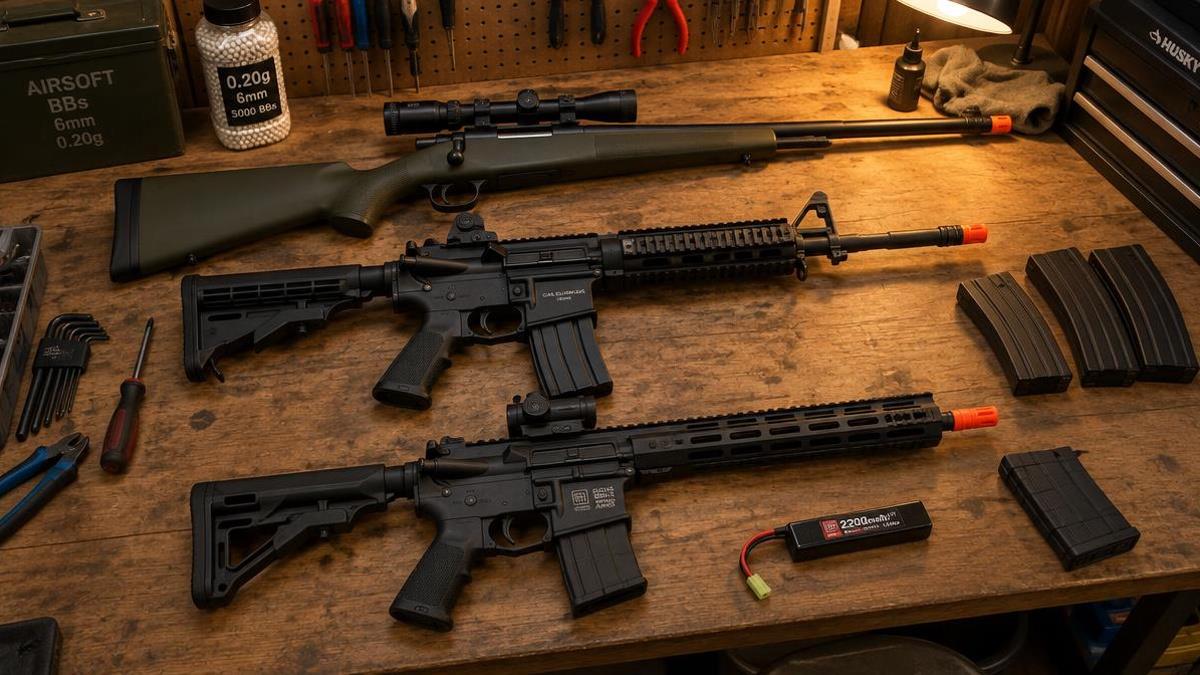
Build up from a solid base of the replica in its standard form, clean it, check the hop for the correct setting, test a variety of different weights of BBs to find the most suitable, and then take note of the chronograph results for a full string of shots. Subsequent changes to parts can then be tested one at a time in exactly the same manner to find out which part did what, and be taken off if required. The field limits can then be relaxed for cosmetic changes once the necessary function, safety, and comfort has been reached.
Make the equipment easy to live with
Label your magazines, make sure you have stored your batteries and gas correctly according to the manufacturer’s instructions, and bring a small repair kit with you. Try to clean your replica and make any minor adjustments to it, within the field, immediately after a game. This will ensure that you have identified any problems with the fasteners, sling, optic mount and other protective equipment that you use, and will be able to remedy them before you next go to play. This will also ensure that you are familiar with all of your equipment, thus ensuring that you are not distracted from communicating with your teammates, moving around the field and making safe and effective decisions during a game.
Field checklist
- Verify the current energy limit and minimum engagement distance for the playing field.
- Use properly rated eye protection and check it before going on the field.
- Test with the BB weight and hop setting you intend to use.
- Record the changes you made in order to be able to repeat useful adjustments or reverse them if needed.
- Don’t use the field for test of faulty airsoft gun parts until they have been checked out.
Final perspective
Essential Safety Equipment for Airsoft Players is part of a total playing system and needs to be evaluated in the same way as other parts of the system. The most important factor for useful performance is the reliability of the safety equipment. The best safety equipment is that which is comfortable, easy to use and familiar to the player. Field rules must be respected and all safety equipment tested before play, with the proposed load of BBs, in the proposed configuration.