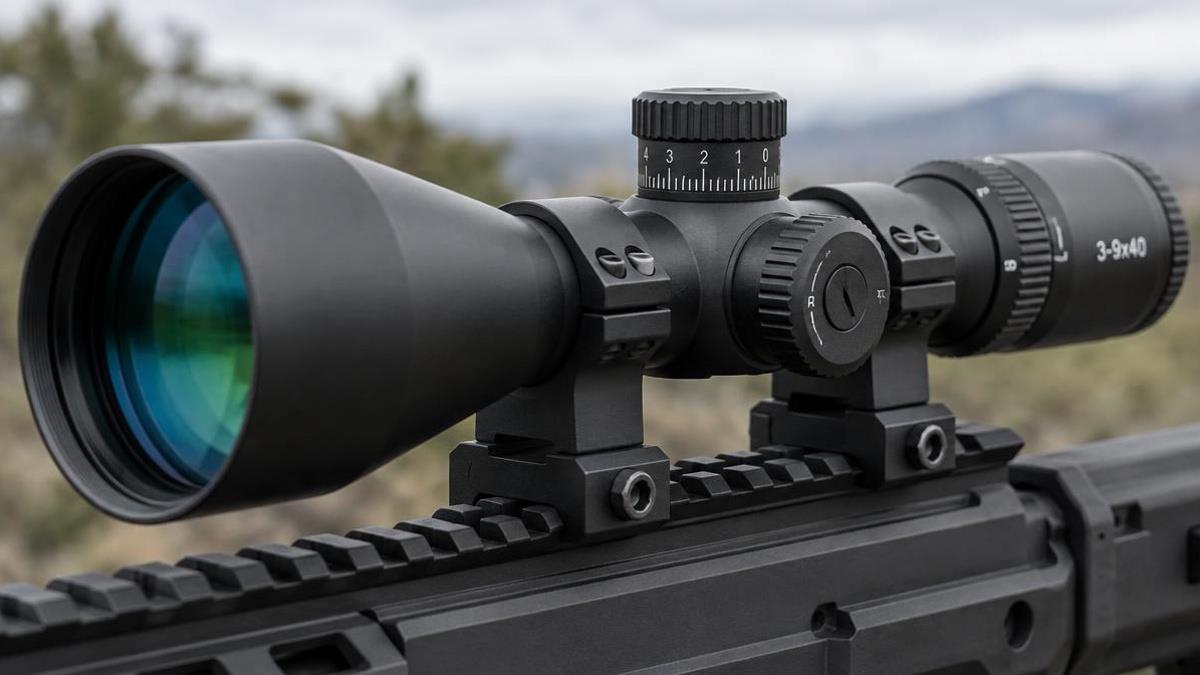
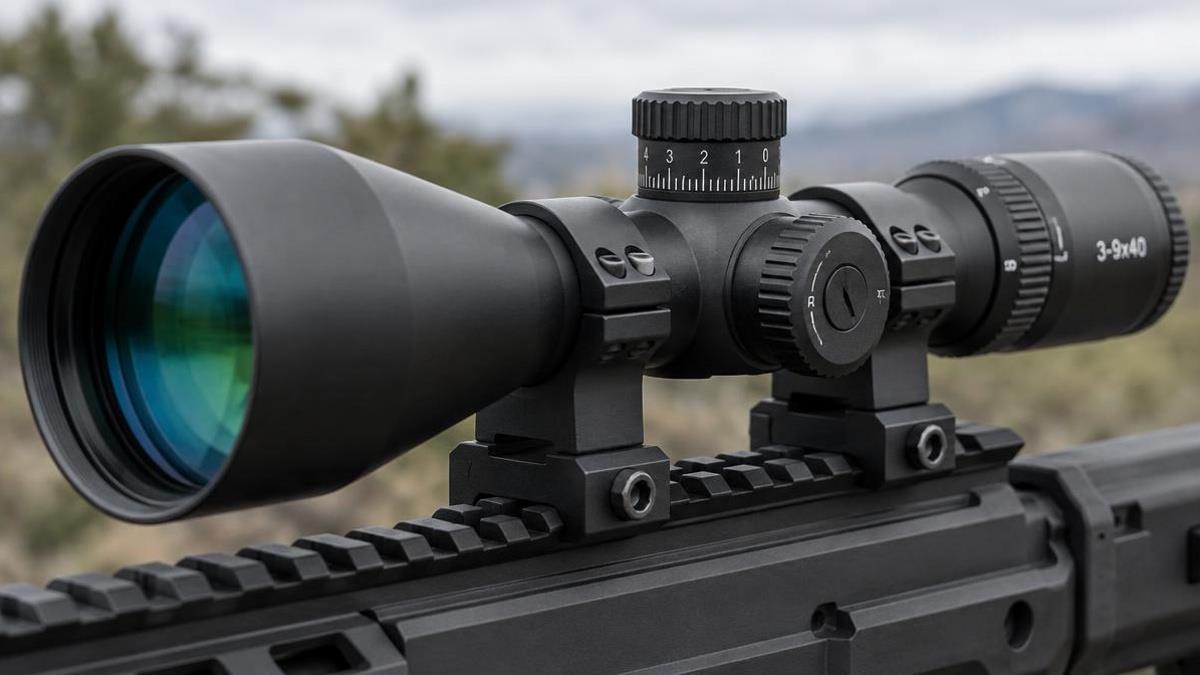
Magnification rating is one of the less interesting specifications on an airsoft scope. Far more important are eye relief, reticle design and solid build quality in scenarios played in undergrowth and woodland.
Scopes on Airsoft Rifles aren’t target shooting scope. They are for a replica firearm that shoots plastic airballs at short ranges. Often these are grabbed and chucked into a bush somewhere and so will experience harsh treatment. Magnification is hardly something to be looking for when evaluating the merits of a scope for Airsoft.
Magnification: less is more
When choosing a scope for use in woodland, you will usually find that the majority of engagement distances are within the 15-45m range. As a result, a 1-4x variable or 4x fixed magnification scope provides more than sufficient capabilities to enable effective use, whilst offering a wide enough field of view to enable the rapid location of moving targets. A 3-9x scope at 9x offers a much too narrow field of view that, by the time you have located your target, they will likely have moved on.
Higher magnification can be better on larger open areas. For most users, however, 4-6 power is enough.
Eye relief and mounting
Eye relief refers to the distance between the scope lens and your eye. This must be long enough to allow the full image to enter your eye, yet short enough to allow a comfortable cheek weld to the stock. Some cheap scopes have eye relief as short as 55mm which can cause problems for most users as they will force you to push forward on the stock thus losing your good cheek weld position.
First check that the scope clears the bolt handle, then ensure the scope tube sits high enough in the rings for your cheek to rest at the same spot on the stock each time.
What to look for on the box
- Scope (fixed 4x or 1-4x variable for woodland/shrub play)
- Min 80mm eye relief (the distance your eye is from the rear of the scope lens) for comfortable shooting.
- Simple reticles such as fine duplexes or simple mil-dot reticles, rather than complex “tree-like” designs.
- Locking or capped turrets to ensure scope zero is not affected by falls etc.
- A one-piece mount is better than two separate rings.
- Nitrogen purged and O-ring sealed if your game is played in wet conditions.
Do you need a scope at all?
Only get a scope after you can consistently hit a large target such as a torso at 30m and you require assistance to locate the target in the first place.
Keep magnification realistic
For Airsoft, high magnification is normally not required. A good field of view, large eye relief and a low profile are more important to allow the player to easily recognize targets while wearing protective gear and to maintain a comfortable cheek weld. The scope should be mounted as low as possible on the air rifle to allow for comfortable shooting.
Confirm the zero with the chosen ammunition
To account for the hop-up’s curved flight path, an airsoft rifle’s zero is not necessarily going to be true at all distances. It should be tested at a variety of known distances in calm conditions to provide a clear reading of where a shot will impact at long range.
How to evaluate the advice
Separate test results from player preferences. When evaluating firearms and airsoft accessories, look at hard numbers like weight, length, magazine size, and chronograph results. Other variables like a trigger’s feel, a firearm’s balance, and a stock’s useability can all vary greatly from one player to another. Keep in mind that people can often test conditions that best suit their needs.
A sensible next step
It makes sense to start off with the basic configuration of your replica and establish a number of base measurements (cleaning, correct hop setting, optimal bb weights, chronograph tests etc.). Then, when you want to make improvements, you should test each improvement one by one to be able to establish whether or not they had a positive effect. In this way, you can avoid pointless changes that could lead to an increase in weight or an exceeding of field limits.
Legal and practical responsibility
Airsoft replicas are items which need to be treated with the same respect as real firearms. They are subject to the same laws regarding purchase, display and usage as the real thing. Also be aware of local restrictions which may prohibit use of replicas in public places and of field specific rules on items such as scopes and stocks. Always transport Airsoft replicas in a sturdy case and never brandish one in public.
Read specifications in context
whilst the product’s actual performance (range, accuracy, velocity etc.) can be influenced by many other factors such as BB weight, temperature, hop-up, barrel wear, test method etc. the dimensions of a product can be much greater than actually felt upon the player. So use the published figures to select from the many models on the market, then go and read repeatable tests upon the field as well as owner reports on how they found the product being used in realistic situations.
Plan upgrades in stages
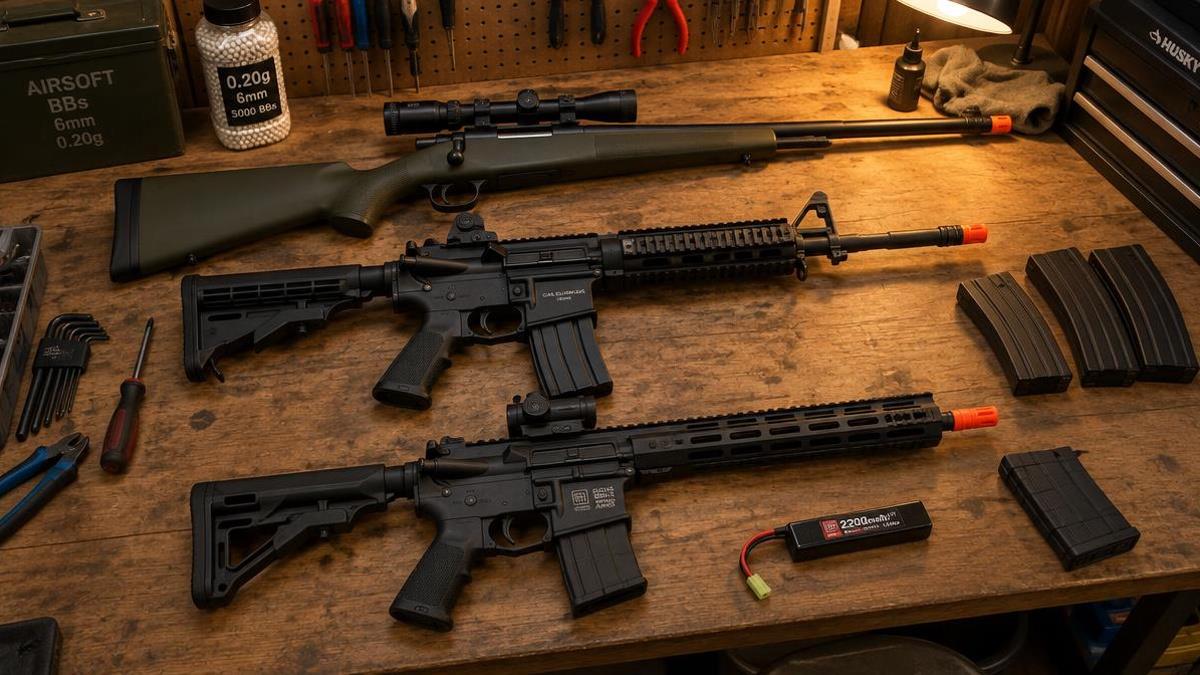
Go back to the basics of start with a clean airsoft replica in the standard configuration (‘as supplied’). Check that it is clean, and has the correct hop up setting for the ammo that you plan to use for the tests. Try a few different weights of BBs to find the ones that will give you the best results, and then take notes as you test them using a chronograph. When looking for solutions to specific problems, test one part change at a time, so that you are able to see what the change was that actually solved the problem that you were trying to solve. External cosmetic modifications can be added at a later date, once you have established that the airsoft replica is capable of giving good service.
Make the equipment easy to live with
Make sure to set up your airsoft gear in such a way that it will be easy for you to transport, to set up prior to matches, to service/maintain. Typically it is wise to label your magazines and to keep your batteries/gas in accordance with the manufacturer’s instructions for storage. Pack a small repair kit for your airsoft gun, containing things for cleaning, general repair. After matches go through all the parts of your airsoft gear to ensure that all the bolts, sling mounts, scopes, masks, etc are all in good working order. Also make sure that you are familiar with all the parts of your airsoft gear so that in the heat of battle you are not distracted by things such as how to switch to a different magazine.
Field checklist
- Check for current limitations on power and minimum engagement distance at the relevant venue.
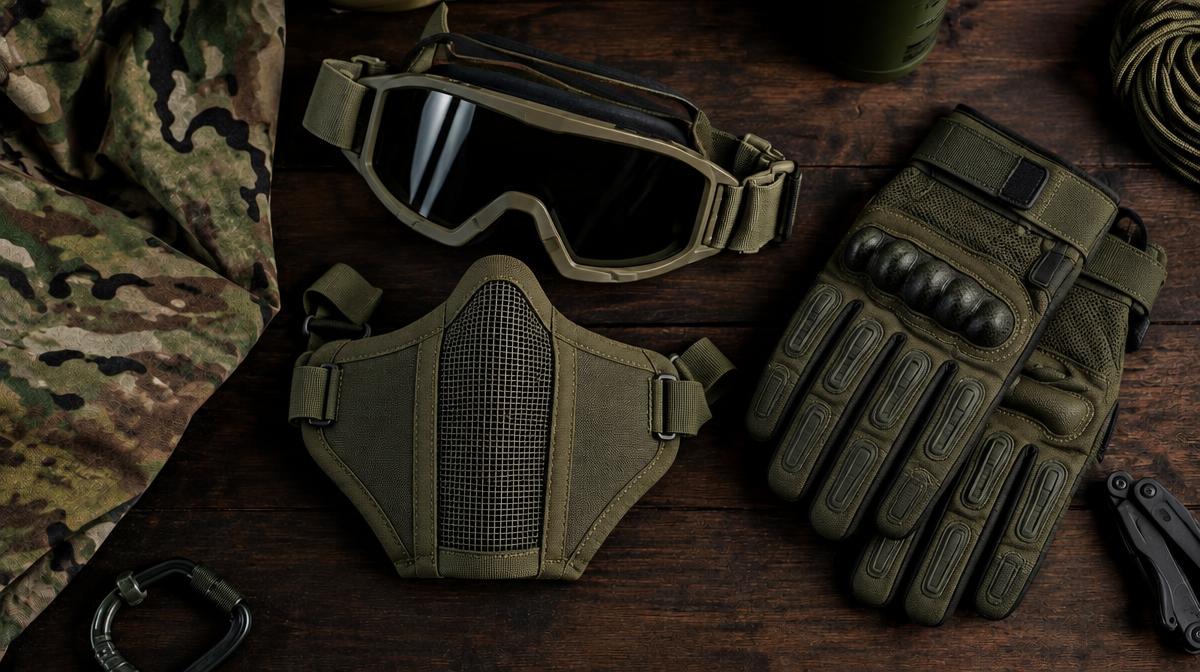
- Ensure that you are using the correct eye protection before going out onto the field and check it regularly for any signs of damage.
- Test with the BB weight and hop setting you intend to use.
- Note changes in order to be able to reprise or reverse them as necessary.
- Do not use damaged replica parts until they have been checked and possibly repaired.
Final perspective
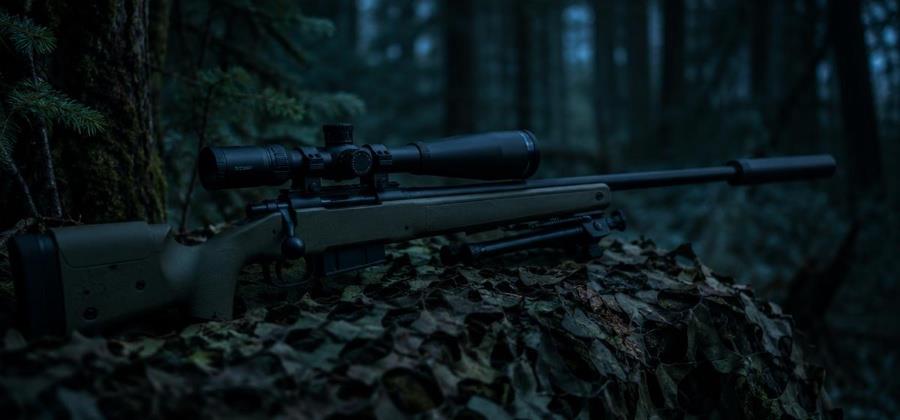
In short, selecting a sniper scope is part of building up a whole system to play with. Ultimately it is a question of how far you can develop useful play with the bits you have bought, as well as safely and reliably using them on the field. So test things out, find out the rules for the fields you visit and select bits to complement how you actually play Airsoft.